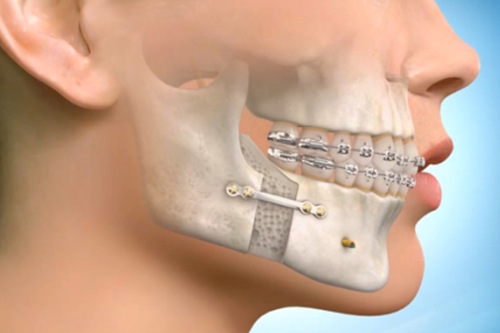
Orthognathic surgery, also called jaw surgery, is performed to realign the jaw and rectify jaw bone irregularities brought on by congenital defects, injuries, or improper jaw bone development.
About Orthognathic Surgery
Orthognathic surgery is typically advised if orthodontic treatment alone is unable to treat your jaw problems. It is a significant procedure that is carried out under general anaesthesia. Read on to learn more about orthognathic surgery, including its types, methods, advantages, and complications.
Who Qualifies For Orthognathic Surgery?
Jaw surgery is indicated once the jaw growth ceases, typically between the ages of 14 and 16 for girls and 17 and 21 for males. A dental specialist near you, particularly an oral or maxillofacial surgeon, can help you decide if orthognathic surgery is right for you.
Why Is Orthognathic Surgery Conducted?
- Adjust your bite to help your teeth fit better when your mouth is closed.
- Correct congenital deformities like cleft palates.
- Correct face misalignment.
- Adjust face symmetry.
- Enhance functions of the mouth such as chewing and biting.
- Provide relief from breathing problems like mouth breathing or obstructive sleep apnea.
- Alleviate temporomandibular joint dysfunction-related pain (TMJ).
Who can Perform Orthognathic Surgery?
Orthognathic surgery is typically carried out by an oral and maxillofacial surgeon in collaboration with an orthodontist. Consult an oral and maxillofacial surgeon at the best dental clinic in Mysore.
How is Orthognathic Surgery Performed?
Orthognathic surgery is performed inside the mouth, leaving no external scars from the incisions on the patient’s face. However, occasionally it may also be necessary to make a few small incisions outside the mouth.
What are the Different Types of Orthognathic Surgery?
- Maxillary osteotomy (a procedure done on the upper jaw, maxilla).
- Mandibular osteotomy (a procedure done on the lower jaw, mandible).
- Bimaxillary osteotomy (a procedure done on upper and lower jaws both).
- Genioplasty (a procedure done on the chin).
It is advisable to go to a maxillofacial surgeon at the best dental hospital in Mysore for orthognathic surgery.
What are the Benefits of Orthognathic Surgery?
- Improves how well teeth perform tasks like biting and eating.
- Improves facial appearance, which boosts self-confidence.
- Enhances swallowing and breathing.
- Reduces temporomandibular joint dysfunction-related pain (TMJ).
- Helps in speech impairment.
What are the Possible Complications of Orthognathic Surgery?
Some complications that might occur with orthognathic surgery are:
- Fracture of the jaw bone.
- Injury to the nerve.
- Blood loss.
- Some teeth might require root canal therapy.
- Jaw returns to its initial position.
Conclusion
Orthognathic surgery can significantly improve a patient’s quality of life both functionally as well as aesthetically. However, remember that it is a major operation and has a long recovery period. Therefore, you must evaluate all the benefits and drawbacks of orthognathic surgery with a maxillofacial surgeon or the best dental surgeon near you before making a final decision.
For the best outcomes, orthognathic surgery should be conducted by a skilled oral and maxillofacial surgeon at a dental hospital that has all the latest technology.
Request an appointment at Apollo Dental, Mysore Call 1800 1020 288 to book an appointment OR click on this link
The type of procedure, the surgeon, the hospital where it is performed, and other factors all affect the price of a jaw operation. Check with your health insurance company if they provide coverage for orthognathic surgery.
A hospital stay of about 3 days can be expected after jaw surgery; however, it may vary depending on the patient’s general health condition, age, etc.
The surgery is performed under general anaesthesia, so there is no pain during surgery. Patients usually experience pain after the anaesthesia wears off, which can last for a few days. This can be managed with painkillers.